The Testament of Ann Lee is a hypnotic, stirring film
Mona Fastvold's musical historical drama The Testament of Ann Lee tells the story of the formation of religious group the Shakers in 18th century America.

In mid-18th Century Manchester, a devout Quaker named Ann Lee (Amanda Seyfried) – traumatised as a child by the sight of her parents having sex followed by the loss of her own four children before they turned one – finds herself in prison because of her faith.
Mona Fastvold’s remarkable film The Testament of Ann Lee suggests that the combination of sexual trauma and the malnutrition experienced in jail, provokes a vision of herself as the Second Coming of Christ, a message that finds enough receptive ears for her to become the centre of a small congregation.
Harassed by the traditional religious powers and sensing that the new world of the Americas would be more open to her message of chastity, equality and humility, Lee persuades a handful of followers to travel to New York and start a new life.
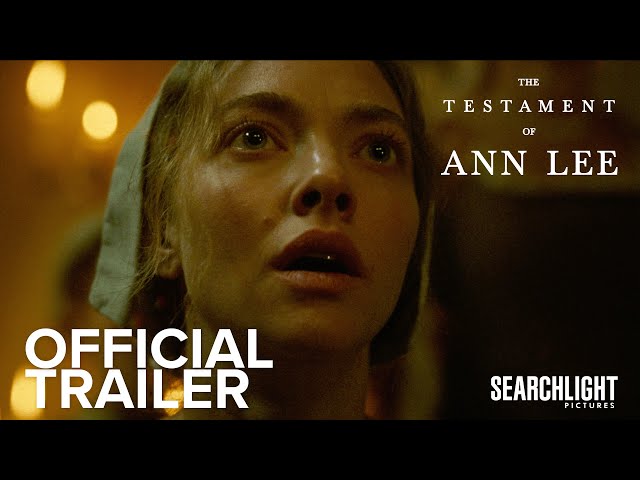
Known as the Shakers because of the often frenzied expression of their zeal, Lee’s following grew alongside a nation itself fighting for independence from old ways but not everyone was prepared to accept a woman as preacher.
Superbly staged, photographed and performed, The Testament of Ann Lee is hypnotic and watching it can feel as stirring as Lee’s own testimony.
The Shakers believed that they honoured God through the exercise of their craft and cinematographer William Rexler (shooting on God’s own format, 35mm film), production designer Sam Bader and costume designer Malgorzata Karpiuk, along with their many Hungarian colleagues, all deliver on that front.
Over the past ten years or so I’ve moved from firm atheist to soft agnostic and I’ve become more and more curious about spirituality and faith without it ever tipping over into a conviction of my own. I found Testament to be a wonderfully strange combination of respect for what the Shakers believe – and how they manifest that belief – while not buying into it as literal truth. Or rather, it’s that they believe something that’s truth, not what they believe.

From L to R: Matthew Beard, Amanda Seyfried, Scott Handy, Thomasin McKenzie, Jeremy Wheeler, Stacy Martin, and Lewis Pullman in The Testament Of Ann Lee.
Searchlight Pictures
Blessedly, The Testament of Ann Lee tells you only as much as it needs you to know for its story, but it left me with so many questions. Questions about the social and political context of Revolutionary America – how many other radical splinter religions were there at the time, taking advantage of the intellectual ferment to gain followers before heading up river to stake a claim on not-quite virgin territory to start their own cult?
Is there something about the American frontier that fertilises this behaviour?
And how does a religion that doesn’t believe in physical relations between couples imagine a non-reproducing future for itself? I’m so curious about the theology of it.

Amanda Seyfried and ensemble in The Testament Of Ann Lee.
Searchlight Pictures
Unlike many churches, the Shakers appear to have restricted their community outreach to recruitment. They didn’t appear to have a culture of service, for example. They started no orphanages or hospitals and, like the Amish, were focused inwards. But made beautiful buildings, furniture, gardens - and coffins.
Fastvold, herself, makes such interesting choices. The physical and vocal expressions of devotion that the Shakers were known for are presented as much more choreographed (by Celia Rowlson-Hall, music by Daniel Blumberg) than spontaneous, but making the film an actual musical serves to reinforce its own theme.
After all, believing in the truth of all that singing and dancing in front of you requires an audience to take a similar leap of faith as the Shakers themselves.
Dan Slevin is a Wellington-based writer who reviews films for RNZ.
