What is a sabbatical and how do I get one?
Extended time off for professional development and a mid-career refresh is rare for New Zealand workers, but some have secured the elusive perk.
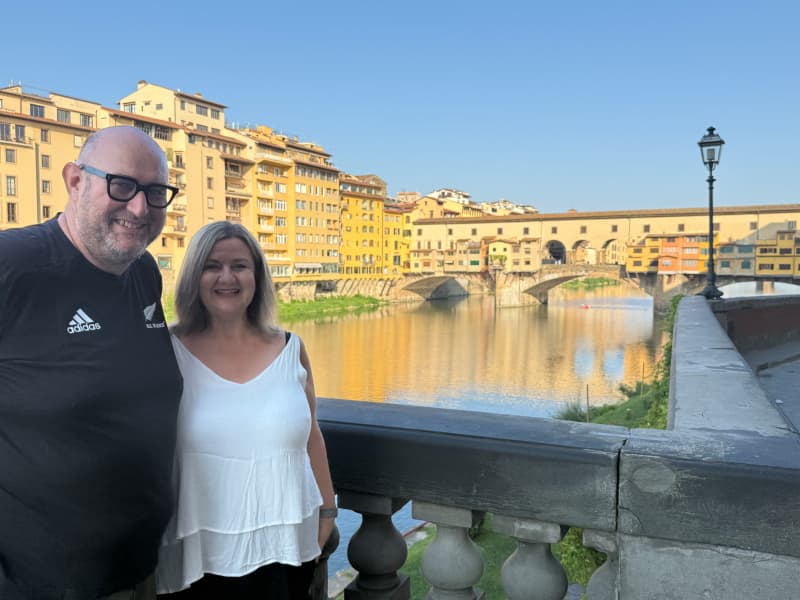
Belinda Johnston had clocked nearly three decades working in education. She was getting tired.
“As a principal, I did feel that I’m always fighting the system to get things that I need for my school, and it’s quite tiring,” says Johnston, who led the staff at Auckland’s Sommerville Special School.
“I did at the time, think 'I don't know how much more I can do this, how many more years have I got left in me?'”

New Zealand academics often head to an overseas university during their sabbatical break, including to the University of Oxford with its Bodleian Library.
Wikipedia
So, it was a relief when Johnston's application for sabbatical leave was approved by the Ministry of Education, which has a sabbatical scheme for teachers and principals.
In 2025, Johnston used her ten weeks of paid leave to explore how special needs schools in the UK manage staff induction and retention, two things she wanted to improve at Sommerville. She travelled around Europe with her husband, visiting schools, and met up with a sick relative in Australia.
"It was a real luxury to have that time being paid to both follow my interests and that was going to help me when I came back as well."
Despite about 20 percent of New Zealander workers experiencing feelings of burnout, sabbaticals, or mid-career breaks, are not common outside of academia. However, some industries, like education, medicine, and Christian ministry, are more receptive than others in offering extended breaks to long-serving staff members.
What is a sabbatical?
In the biblical book of Leviticus, the God of the Israelites commanded them not to sow their fields or prune their vineyards for one year out of every seven. Instead, they were to live off whatever the land yielded. It was largely an agricultural society, so that essentially meant a rest for humans as well.
In 1880, Harvard University resurrected the idea of a sabbatical by providing a long period of leave at regular intervals for academic staff to focus on professional development, research and rejuvenation.
“...Often it would be like, ‘Well, I'm, I'm taking a boat to England - there's a month - and I'll go to Oxford and I'll collaborate with a professor I know there and we'll do some research and then I'll be writing that up and I'll write it on the boat ride home',” explains Dr Jarrod Haar, a professor of management and Māori business at Massey University.
It is an enduring perk for today’s academics at most universities. Typically, a university’s academic staff are entitled to extended leave from six to 12 months every three to six years, Haar says.

Dr Jarrod Haar.
AUT
I’m not a professor. Can I take a sabbatical?
There are pockets of industries where non-academic New Zealand workers have a better chance of snagging a sabbatical or mid-career break.
About 20 years ago, Auckland University of Technology extended the concept of a sabbatical to non-academic staff.
The scheme allows staff to put away 20 percent of their income over two or four years, so they can take up to six or 12 months leave, essentially paid for by the forfeited pay, explains the university’s director of communication, Alison Sykora.
Applicants to the Ministry of Education's sabbatical program vie for a limited number of spots each year, aimed at providing time for reflection and rejuvenation. In the last round, the ministry received 866 applications and awarded 297, says Anna Welanyk, from the ministry’s Education Workforce.
Keryn King, a Wellington-based learning and behaviour resource teacher working in education for 38 years, explored the experience of students who speak a language other than English. She travelled with her husband, who was also on a sabbatical through the Presbyterian Church of Aotearoa New Zealand.
"I was just really grateful for the time to do that. It's just dedicated time away from the coal face in order to pursue something like that. It's really valuable."
When Pastor Steven Goulstone signed up to lead Wellington South Baptist Church in 2019, he had the option to include a sabbatical break in his employment contract.
“I think there's probably that biblical principle of rest, absolutely, but it wasn't like I had to, or anyone else had to say, well, ‘It says it in Leviticus or wherever that this must happen'.”
He submitted a plan to church elders for how he wanted to spend his 11-week sabbatical in 2024 and it was rejected. The feedback: too much professional development and not enough rest. He refined the plan and ended up going to the US for a conference, reading a few work-related books and spending time with his family, including plenty of reflection time.
“Before the sabbatical, I really felt I needed it. I was tired. I wouldn't say I was anywhere near burnt out, but I was definitely tired, and then on the other end of it, I felt like, ‘Great, I'm now ready for a new season'.”
In health, sabbatical leave is common for specialist doctors in hospitals but it is not typically in a GPs employment contract, according to Dr Luke Bradford, the president of the Royal New Zealand College of General Practitioners.
Why aren’t sabbaticals or mid-career breaks more common in New Zealand?
Australia's “long-service leave” is enshrined in state law, says Jessica Prebble, a senior associate with LegalVision New Zealand, which assists small to medium-sized businesses with legal work. For example, New South Wales employees are entitled to two months of additional leave after ten years of employment.
This type of leave could become more common as Australian companies open up offices here, says Prebble.

Jessica Prebble from LegalVision.
Jesse Taylor
However, she rarely sees it on offer in local employment contracts. Occasionally, an individual employee might negotiate some extended leave that is often unpaid. One example is a media company that allowed an employee time off to complete a novel.
“I think employee retention is a big one because otherwise you’re going to lose that person if they want to pursue that for a month or two months, and then you have to train someone else up.”
Employees might bring back new creativity, skills and energy that could benefit the entire company, she says.
What if I’m a small business owner?
After 28 years in communication training, business owner Miriam McKenzie felt burnout. She loved the work of training people - from kids to managers - in communication, but the slog of attracting business was exhausting.
“I felt really resentful of my time being spent doing it, and I didn't enjoy it, and I was too small to be able to employ. It was a wee bit of a catch-22 in a small business.”
She made the decision in 2022 to put the business on ice while she returned to work as a school teacher with time to research how speech impacts literacy. As a small business owner, she couldn’t afford to take a long period of paid leave. Teaching allowed her to escape the daily grind while providing brain space to explore her thesis.
In the end, the break made her realise she was happy back in the classroom. Now, she works part-time as a teacher with a regular income taking the pinch out of the hustle needed to run a small business. Recently, her business, Say It Clearly, organically attracted more corporate work.
“... it was also really empowering that I could say, ‘You know, I'm not going to do this. I'm not going to spend my time doing this. I'm going to do something else instead'.”
“ And that led me to be able to focus on what I wanted to do.”


