'My father knew how to die because his community had shown him how to die'
Much more than "a piss-up around a coffin", a communal Irish wake helps people process death in a healthy way, says Kevin Toolis.
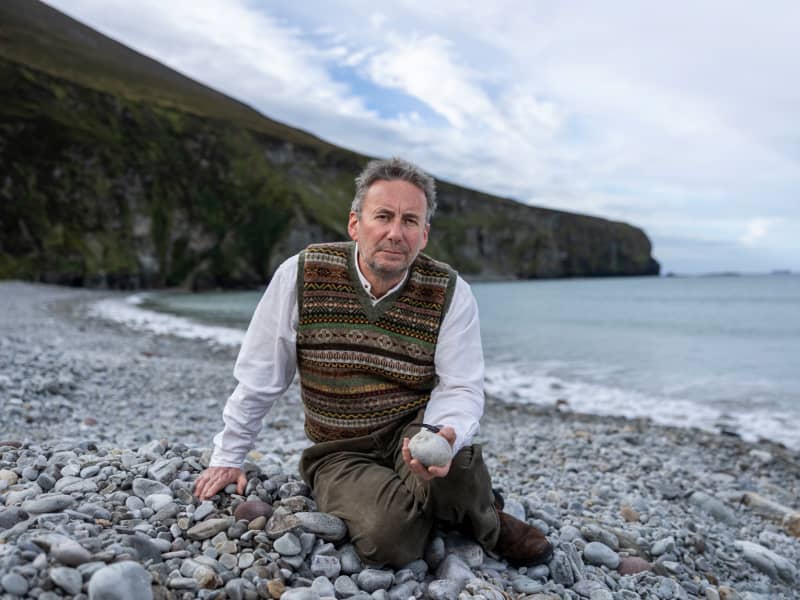
Although he'd seen his first dead body at seven, journalist and filmmaker Kevin Toolis had an "existential shock" when his 20-year-old brother Bernard died of leukaemia.
"I couldn't believe that this perfect facsimile of him had ever been human because it was so cold, so alien... I really became a reporter because I was in mourning, not really for my dead brother, but for this young man - me - who'd lost that sense of invulnerability that the young often have. I knew that I was sort of mortal and very vulnerable."
Toolis was desperate to find "a suit of armour" with which to protect himself from the fear of mortality. The answer, he now believes, is in the ancient community ritual of the Irish wake.

"You could say that to be truly human is to bear the burden of your own mortality and strive in grace to help others carry their burden too, sometimes lightly and sometimes courageously.
"We're all mortal, and in that act of the wake, we remember to ourselves that we do share that common humanity and that common mortality."
The "Western death machine" has abstracted the fact of death over the last two centuries, Toolis says.
But at an Irish wake, you might see toddlers playing at the foot of the coffin or a group of drunk teenagers turning up at 3am - as he did to a funeral on the remote Irish island where he grew up.

Kevin Toolis: You Never Forget Your First Corpse, Do You?
"Respectful to a certain extent", but also keen for the free cigarettes, Toolis says that within 10 feet of the corpse, he and his teenage crew played a "very simple, foolish teenage dating game" called The Button, which is something like Spin the Bottle.
"It was just part of the ritual of the wake, and these wake games, as they're called, are very, very old. They actually go back all the way into the Iliad."
Since ancient times, Irish people have been encouraged to celebrate life in the face of death, Toolis says, and for old and young, sex is a "natural and healing" response.
"There is obviously a shock in seeing someone that you love dead, and there's obviously a natural desire for affection and emotional contact with someone else. So if it's good enough for the ancient Greeks, then it's probably good enough for us."
At his father's wake, a close female relative performed another ancient ritual by s keening - delivering an emotional vocal lamentation.
The sound was really healing for the bereaved, Toolis says, and since then, he's made it a "life goal" to help revive the ancient practice in Ireland.
"A wave of emotion kind of grips you. It was really cathartic, the heightening of emotion. It grips you, it tears through you. You're bleeding out that emotion."
When someone is dying, many people assume they just want to pull the curtains and not see anyone, Toolis says, but actually we have an obligation to "recognise" rather than "shun" a person at the end of their life.
"We should kind of seek to embrace them, we should go and see them… It's not embarrassing to be dying. We're all going to die one day."
Dying people can also teach us one of the most important lessons that we can ever receive in life, too - how to die.
"My father knew how to die because his community had shown him how to die through his childhood, through his adolescence, his early adulthood, because they died in the tradition of the Irish wake."
Kevin Toolis is giving a series of talks around New Zealand this month.
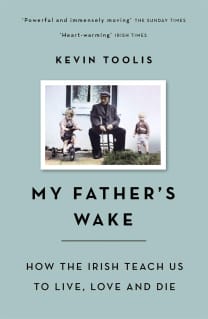
My Father's Wake by Kevin Toolis.
Supplied
